
Introduction
Picture this: You drop your child off at school. They sit down at their desk, open their books, and start learning. But lurking above their heads, inside the ceiling tiles or wrapped around the pipes in the basement, is a silent killer. I’m not trying to be dramatic, but this is the reality for thousands of schools across the UK. Asbestos in schools is not a problem from the 1970s that we solved. It is a very real, very present danger that affects teachers, cleaners, and most importantly, our children.
We tend to think of asbestos as a “building site” problem. We imagine dusty factories and grimy shipyards. But the truth is far more sobering. The same material that was once hailed as a miracle fireproofing solution was pumped into the walls of our public buildings. It was cheap, effective, and nobody was thinking about the 20-year latency period for cancer.
Why am I writing about this today? Because awareness is the first line of defence. We can’t make asbestos disappear overnight, but we can make sure parents, teachers, and administrators know exactly what they are dealing with. Let’s pull back the curtain and look at the health risks of asbestos in our learning environments. 😄 I promise to keep the scares to a minimum and the useful facts to a maximum.
A Brief History of Asbestos in UK Buildings
To understand the problem, we have to look back. Asbestos use in the UK exploded after World War II. There was a massive building boom. We needed to rebuild homes, hospitals, and schools quickly.
The Post-War Building Boom
Builders loved asbestos. It was cheap, durable, fireproof, and easy to work with. It became the go-to material for insulation, roofing, and fireproofing. It was sprayed on steel beams, mixed into plaster, and pressed into floor tiles.
Unfortunately, the health risks were not widely publicised. The first known death linked to asbestos was recorded in 1924 (Nellie Kershaw), but it took decades for regulations to catch up. By the time we realised how dangerous it was, the damage was already done—literally sealed into the fabric of our buildings.
The Ban Isn’t a Magic Wand
The UK finally banned blue and brown asbestos in 1985, and all asbestos (including white chrysotile) in 1999. But here is the kicker: the ban did not remove the asbestos that was already there. Any school built or refurbished before the year 2000 is a potential host for asbestos containing materials (ACMs).
How Common is Asbestos in Schools?
You might be surprised (and horrified) to learn exactly how widespread this problem is. It is not a matter of “a few old schools.” It is the vast majority.
The Staggering Statistics
According to the UK government and various unions, it is estimated that over 75% of UK schools still contain asbestos. That is three out of every four schools. Think about that for a second. Your child’s classroom, the library, the gym—they might all be harboring a dangerous, fibrous mineral.
This is not a problem limited to England. It affects Scotland, Wales, and Northern Ireland. The scale of the problem is enormous, and the cost of removing it all is astronomical.
Where Does It Hide?
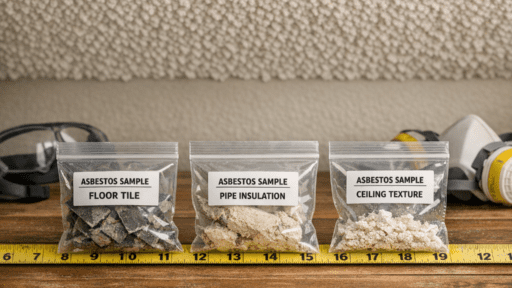
Asbestos is incredibly versatile, so it can be found in many places in a school:
- Ceiling tiles and textured coatings (Artex)
- Insulation boards around boilers and heaters
- Pipe lagging in basements and service ducts
- Floor tiles (especially the old 9×9 vinyl tiles)
- Roofing sheets and gutters
- Fire doors
Why Are Children at Higher Risk?
This is a crucial point. We often think of asbestos as an “occupational” hazard for adults. But the reality is that environmental asbestos exposure affects children differently.
The Longer Time Bomb
Children have longer life expectancies. Asbestos-related diseases like mesothelioma have a latency period of 20 to 50 years. If a child is exposed today, they have a much longer window for that disease to develop.
The Biological Factor
Children’s lungs are still developing. They breathe faster than adults, and they are closer to the ground, where dust can settle. This means they can inhale a higher concentration of fibres relative to their body weight. It is a perfect storm for future health issues.
The Specific Health Threats to Teachers and Staff
It isn’t just the students who are at risk. Teachers, caretakers, and administrative staff spend 40 hours a week in these buildings. Occupational exposure is a very real concern.
The “Invisible” Accumulation
Teachers often retire and, years later, are diagnosed with lung cancer or asbestosis. They never worked in a factory or a shipyard. They simply worked in a school that had damaged ceiling tiles or crumbling pipe insulation.
I’ve spoken to retired teachers who are furious. They trusted their employers to keep them safe. They didn’t know they were breathing in dangerous fibres for 30 years.
The Role of Maintenance Workers
This is where the risk spikes. If a ceiling tile is broken or a pipe bursts, the building maintenance staff (or the janitor) is the one who has to clean it up. Often, they are not told what the material is. They are not given proper PPE (Personal Protective Equipment). They just grab a broom and start sweeping, unknowingly sending a cloud of asbestos dust into the air.
The Law and the Duty to Manage
This is not just a moral issue. It is a legal one. The UK has specific laws to deal with this.
The Control of Asbestos Regulations 2012
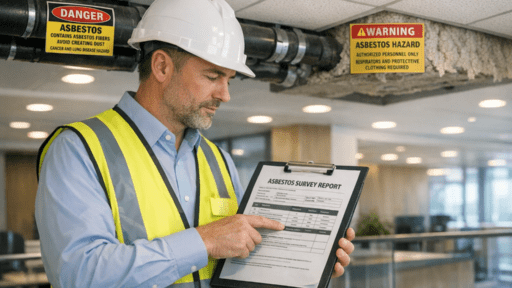
Under these regulations, anyone who is responsible for a non-domestic building (including schools) has a legal duty to manage the asbestos. This means:
- They must find out if there is asbestos on the premises.
- They must record its location and condition.
- They must assess the risk of it being disturbed.
- They must create a management plan to prevent exposure.
- They must keep records and review the plan regularly.
The Reality Gap
Here is the problem. The law exists, but enforcement is tricky. Many schools rely on their Local Authority or Academy Trust to manage this. Sometimes, the “management plan” is just a binder on a shelf that nobody reads. The asbestos management plan is only effective if it is followed by everyone, including the staff who hang up posters and the contractors who come in to fix the lights.
The “Safe” Condition Myth
A common argument is, “If the asbestos is in good condition and left alone, it is safe.” Is that true? Partially, yes. But it is a dangerous oversimplification.
The Risk of Damage
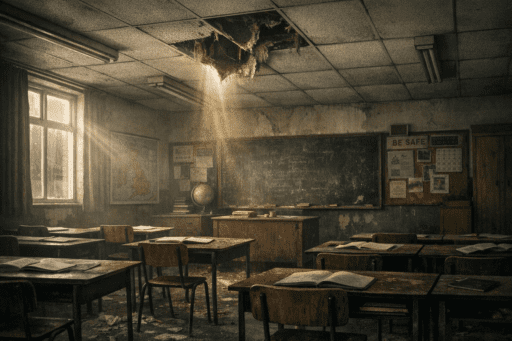
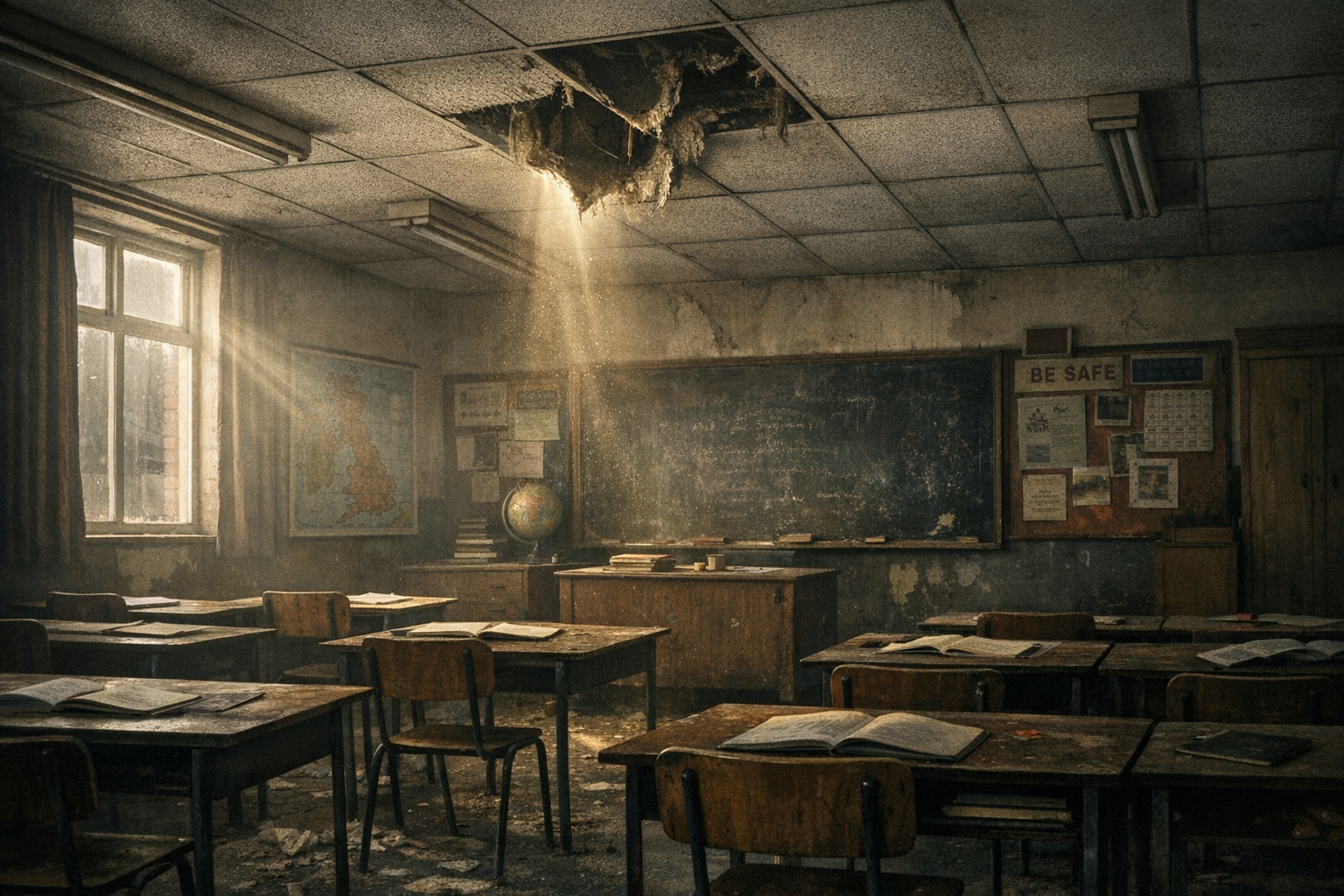
A classroom can be safe today. But tomorrow, a student might throw a book and hit a ceiling tile. A pipe might start leaking and cause a ceiling panel to sag. A caretaker might drill a hole to hang a new whiteboard.
Asbestos fibre release can happen in a split second. The material might be “safe” for decades, and then, in an instant, it becomes a hazard. The risk is not static; it is dynamic.
What Can Be Done? Management vs. Removal
We can’t just wave a magic wand and make it disappear. But we have options.
The “Leave and Manage” Approach
For asbestos that is in good condition and not likely to be disturbed, the safest and most cost-effective approach is often to leave it alone and manage it. This involves:
- Regular inspections (every 6-12 months)
- Keeping a log of all known ACMs
- Training staff on how to spot damage
- Using an asbestos register to tell contractors where it is
The Removal Option
If the asbestos is damaged, or if the school is undergoing major renovation, asbestos removal is the only safe option. This is expensive and disruptive. It can take weeks and requires licensed contractors and air monitoring. However, it is the only way to permanently eliminate the risk.
The Role of Parents and the Public
You might be reading this and thinking, “I can’t do anything about my child’s school.” But you absolutely can.
Asking the Right Questions
As a parent, you have the right to ask questions. You can email the school’s board of governors or the headteacher and ask:
- Does the school have an asbestos register?
- When was the last asbestos survey conducted?
- Were contractors warned about asbestos before the last renovation?
Don’t be afraid to ask. The school should have an answer. If they don’t, you have found a problem.
The Need for Transparency
There is a growing movement calling for a national asbestos register for all public buildings. Until that happens, it is up to us to keep the conversation going. We need to push for transparency and action.
A Comparative Look: UK vs. The World
How do we compare to other countries? The UK is actually stricter than many nations, but that doesn’t mean we are “safe.”
The Global Picture
Countries like Russia, China, and India still mine and use asbestos. The United States has not fully banned it. In fact, until recently, it was still imported for use in certain products.
The UK ban in 1999 was a good move, but we are living with the legacy of decades of use. We have one of the highest per-capita rates of asbestos-related deaths in the world. This is the price we are paying for the decisions of the past.
Conclusion: Knowledge is Protection
Let’s be honest: the idea that our schools might be dangerous is scary. But being scared is not the same as being helpless. Asbestos exposure in schools is a serious issue, but it is a manageable one.
The key is awareness and action. If you are a teacher, learn where the asbestos is in your building. If you are a parent, ask the hard questions. If you are a school governor, make sure your duty holder is doing their job.
We can’t go back in time and stop them from using it. But we can absolutely protect the children and staff who are in those buildings today. It requires effort, money, and political will—but the health of our next generation is worth every penny. 😊
Frequently Asked Questions (FAQ)
1. What should I do if I suspect asbestos in my child’s school?
First, don’t panic. Ask the school administration if they have an asbestos register and a management plan. If they cannot provide one, contact the Local Authority or the Academy Trust.
2. Is it safe for my child to attend a school with asbestos?
Generally, yes, if the asbestos is in good condition and undisturbed. The risk comes from damaged materials or renovation work. Ask the school about their maintenance protocols.
3. How often should schools inspect their asbestos?
The regulations require a review of the management plan every 12 months, but a physical inspection of known ACMs should happen more frequently, especially in high-traffic areas.
4. Who is responsible for asbestos in a school?
A “duty holder” is designated. This could be the Local Authority, the Academy Trust, or the Board of Governors. They are legally responsible for managing the risk.
5. Can asbestos in schools cause mesothelioma?
Yes. Mesothelioma is almost exclusively caused by asbestos exposure. Teachers and staff are at a higher occupational risk, but the long latency period also poses a significant risk to children.
Disclaimer: This content is for informational purposes only. Always consult a licensed asbestos professional for surveys, removal, or compliance with local regulations.