
If you are planning to refurbish or demolish any building constructed before the year 2000, I have one piece of advice that could save you thousands of pounds and potentially save lives: get an R and D asbestos survey done first. Over the years, I have watched countless projects grind to a halt because someone assumed they could skip this crucial step. Trust me, cutting corners with asbestos is never worth the risk.
An R and D asbestos survey—short for Refurbishment and Demolition survey—is a specialist inspection designed to locate and identify all asbestos-containing materials (ACMs) within a building before any intrusive construction work begins. Unlike a standard management survey, this type is far more thorough and destructive. Surveyors physically access hidden spaces like wall cavities, ceiling voids, and beneath floor coverings to ensure nothing dangerous gets disturbed during your project.
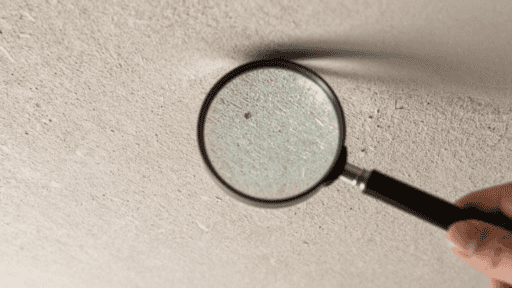
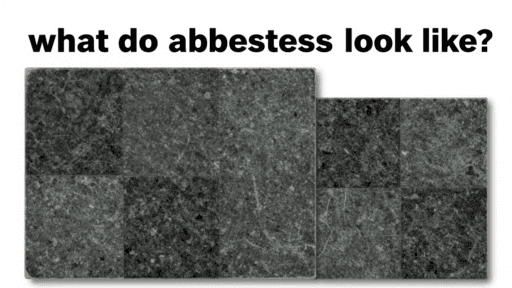
Now, you might be wondering whether this really applies to your situation. Perhaps you think your building is too new, or the work is too minor. Let me be blunt: asbestos was used extensively in UK construction right up until 1999. It hides in places you would never suspect—behind tiles, inside pipe lagging, within ceiling panels, and even in textured coatings on walls. If your project involves drilling, cutting, demolishing, or stripping out any part of a building, you absolutely need this survey.
In this comprehensive guide, I will walk you through everything you need to know. We will cover the legal requirements, the step-by-step process, costs, how to choose a surveyor, and what happens after the survey is complete. By the end, you will have complete clarity on why an R and D asbestos survey is not just a legal box-ticking exercise but an essential safeguard for your project, your workers, and your peace of mind.
Article Outline
| Heading | Subheading | LSI Keywords |
|---|---|---|
| H2: What Exactly Is an R and D Asbestos Survey? | Definition, purpose, and scope | Refurbishment and demolition survey, ACMs, intrusive inspection |
| H2: Why the R and D Asbestos Survey Is Legally Required | CAR 2012, duty holder responsibilities | Control of Asbestos Regulations, HSE enforcement, legal compliance |
| H2: R and D Asbestos Survey vs Management Survey | Key differences and when each applies | Type 2 survey, annual reinspection, non-domestic premises |
| H2: When Do You Need an R and D Asbestos Survey? | Specific triggers and project types | Pre-refurbishment, demolition planning, building alterations |
| H2: The Step-by-Step Process of an R and D Asbestos Survey | What happens during the inspection | Bulk sampling, laboratory analysis, survey report |
| H2: How to Choose a Competent Asbestos Surveyor | Qualifications and accreditations | UKAS accreditation, P402 certificate, BOHS qualification |
| H2: Understanding the Costs Involved | Pricing factors and budgeting tips | Survey pricing, sample costs, property size |
| H2: What Happens After the Survey Is Complete? | Next steps and asbestos removal | Asbestos register, licensed removal, encapsulation |
| H2: Real-World Scenarios and Lessons Learned | Practical examples from actual projects | School refurbishment, warehouse demolition, residential extension |
| H2: Common Mistakes to Avoid with Asbestos Surveys | Pitfalls and how to sidestep them | Wrong survey type, unqualified surveyors, incomplete access |
| H2: Frequently Asked Questions | Addressing common queries | Survey duration, domestic properties, DIY feasibility |
| H2: Conclusion | Key takeaways and final advice | Safety first, professional guidance, project planning |
What Exactly Is an R and D Asbestos Survey?
Let me break this down in plain English. An R and D asbestos survey is a Refurbishment and Demolition survey. It is a highly intrusive inspection carried out by a qualified surveyor to locate and identify every asbestos-containing material (ACM) within the specific area of a building where construction work will take place.
This is fundamentally different from simply poking your head into a ceiling void and having a quick look. The surveyor will physically access every concealed space. They will lift floor tiles, open up wall cavities, remove ceiling panels, and inspect behind cladding. Every suspect material gets sampled—these are called bulk samples—and sent to a UKAS-accredited laboratory for definitive analysis.
The survey report you receive is incredibly detailed. It includes:
- An asbestos register listing every identified ACM
- Floor plans with ACM locations clearly marked
- Laboratory certificates confirming the type and concentration of asbestos found
- Risk assessments for each material based on its condition and location
- Photographic evidence of sampled areas
I once worked on a Victorian school conversion in Manchester where the R and D asbestos survey uncovered asbestos insulating board behind original plasterwork that nobody suspected was there. Without that survey, workers would have drilled straight through it during the electrical refit. The consequences of that exposure could have been catastrophic—and the project would have faced immediate shutdown by the HSE.
Why the R and D Asbestos Survey Is Legally Required
This is where many people get a rude awakening. In the United Kingdom, the Control of Asbestos Regulations 2012 (CAR 2012) places strict legal duties on anyone responsible for maintaining or repairing non-domestic premises. This person is known as the “duty holder,” and they have a legal obligation to manage asbestos risks within their building.
However, Regulation 7 goes further. It specifically states that before any work is carried out that is liable to disturb asbestos, the employer must take reasonable steps to identify whether asbestos is present. The Health and Safety Executive’s Approved Code of Practice (L127) makes it crystal clear: an R and D asbestos survey is the recognised method for fulfilling this obligation before refurbishment or demolition.
The penalties for non-compliance are severe:
- Improvement or prohibition notices from the HSE, which can shut your site down immediately
- Prosecution leading to unlimited fines
- Imprisonment for the most serious breaches
- Civil litigation from workers or future occupants who develop asbestos-related diseases
I have personally seen a developer in Birmingham receive a prohibition notice because they started stripping out a 1970s office block without any survey. The project was halted for six weeks while emergency sampling and removal took place. The total cost exceeded £40,000—far more than a proper survey would have cost in the first place.
R and D Asbestos Survey vs Management Survey
This is one of the most common sources of confusion, so let me set the record straight once and for all. These two surveys serve entirely different purposes, and you cannot substitute one for the other.
| Feature | Management Survey | R and D Asbestos Survey |
|---|---|---|
| Primary Purpose | Manage asbestos during normal building occupation | Locate all ACMs before refurbishment or demolition |
| Level of Intrusiveness | Low—visual checks and minor sampling | High—fully intrusive and destructive inspection |
| Access Required | Readily accessible areas only | All areas, including hidden and concealed spaces |
| Legal Trigger | Required for all non-domestic buildings built before 2000 | Required before any refurbishment or demolition work |
| Output | Asbestos register and management plan | Detailed report with ACM locations, quantities, and risk ratings |
| Frequency | Reviewed annually; reinspection surveys as needed | One-off survey tied to a specific project |
Think of a Management Survey as a routine MOT for your building. It checks the obvious things and keeps you legal during day-to-day operations. An R and D asbestos survey, on the other hand, is the deep-dive diagnostic you need before performing “surgery” on the building. It is thorough, destructive, and exhaustive.
A Management Survey simply will not give you the information you need to safely demolish a partition wall or rip out old plumbing. If you rely on it and miss hidden asbestos, the consequences can be devastating.
When Do You Need an R and D Asbestos Survey?
The short answer: anytime you plan to disturb the fabric of a pre-2000 building. But let me give you some specific examples to make this crystal clear.
You definitely need one if:
- You are demolishing all or part of a building
- You are carrying out major refurbishment work such as rewiring, replumbing, or replacing heating systems
- You are removing internal walls, ceilings, or floor coverings
- You are installing new staircases, lifts, or structural elements
- You are upgrading a building’s exterior cladding or roofing
You probably need one if:
- You are drilling into walls or ceilings for new fixtures
- You are replacing old window frames or door frames
- You are carrying out any work that penetrates surfaces which might contain asbestos
You might not need one if:
- The building was constructed after 1999 and has documentary proof of this
- You are only doing minor decorative work like painting or wallpapering (though even here, caution is wise)
Here is a real scenario: a client of mine wanted to convert a 1980s warehouse in Leeds into loft apartments. They assumed a quick visual check would suffice. I insisted on a full R and D asbestos survey. The results? Asbestos cement roof panels, asbestos vinyl floor tiles, and asbestos gaskets in the plumbing system. Every single one of those materials needed specialist removal before any construction could begin.
The Step-by-Step Process of an R and D Asbestos Survey
Understanding what happens during the survey helps set your expectations and ensures smooth cooperation with the surveying team. Here is exactly what to expect:
Phase 1: Pre-Survey Planning The surveyor will request building plans, any previous asbestos reports, and details about the planned work. They will agree on the exact scope—the areas to be surveyed and the level of intrusion required. This planning stage is critical because it ensures nothing gets missed.
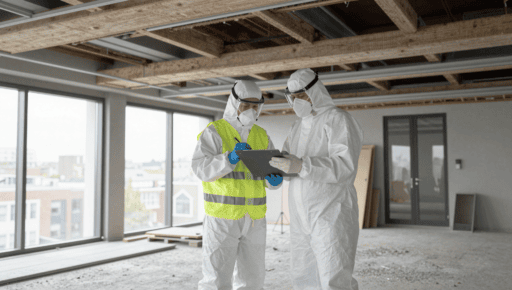
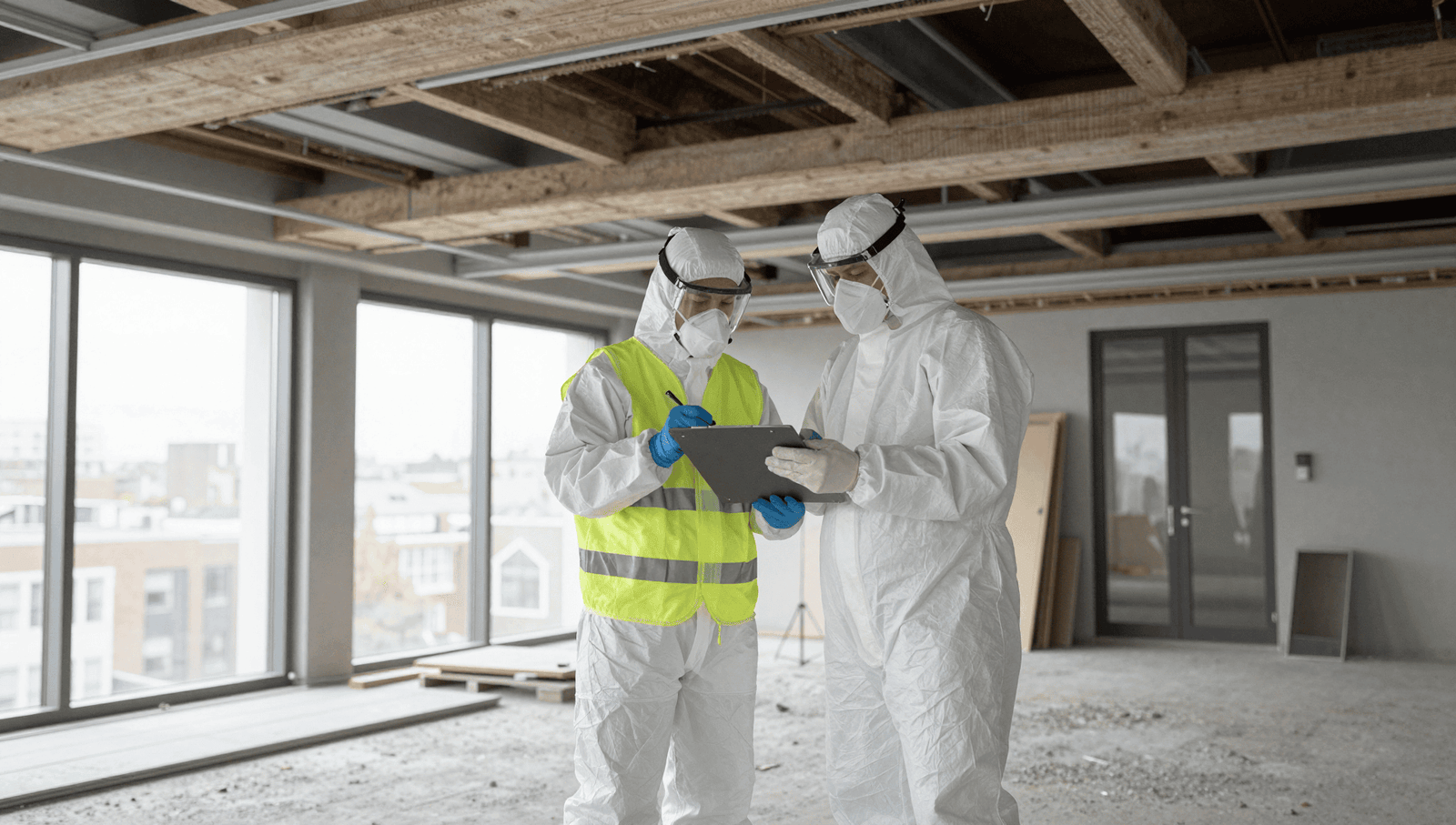
Phase 2: On-Site Inspection The surveyor arrives in appropriate personal protective equipment (PPE). They systematically work through every area within the agreed scope, physically accessing concealed spaces. This might involve:
- Lifting carpet tiles and vinyl flooring
- Removing ceiling tiles and accessing voids above
- Opening up wall cavities and service risers
- Inspecting behind cladding and panelling
- Examining pipe lagging and boiler rooms
Phase 3: Bulk Sampling Every suspect material gets sampled. Small pieces are carefully extracted, sealed in individual containers, and labelled with unique reference codes that correspond to locations on the floor plans.
Phase 4: Laboratory Analysis Samples are sent to a UKAS-accredited laboratory. Analysts use Polarised Light Microscopy (PLM) to identify the type of asbestos (chrysotile, amosite, crocidolite) and estimate the concentration present.
Phase 5: Report Delivery You receive the comprehensive report, typically within 10 working days of the site visit. This becomes your project blueprint for managing asbestos safely.
How to Choose a Competent Asbestos Surveyor
Not all surveyors deliver the same quality of work, and choosing the wrong one can be just as dangerous as having no survey at all. Here is what I look for:
Essential Qualifications:
- UKAS accreditation to ISO 17020 for the surveying company—this is the gold standard
- P402 certificates (Proficiency in Asbestos Surveying and Bulk Sampling) from the British Occupational Hygiene Society (BOHS) for individual surveyors
- Professional indemnity insurance and public liability insurance
Questions to Ask Before Hiring:
- How many R and D asbestos surveys have you completed on similar buildings?
- Can you provide references from recent clients?
- What is your typical turnaround time for reports?
- How do you handle unexpected findings during the inspection?
Red Flags to Watch For:
- Prices that seem too good to be true—they usually are
- Reluctance to provide accreditations or certificates
- Vague descriptions of their inspection methodology
- No mention of laboratory analysis or sample documentation
I always recommend obtaining at least three quotes and checking online reviews. A good surveyor will be transparent, thorough, and happy to explain their process in detail.
Understanding the Costs Involved
Let us talk money, because I know this is on your mind. The cost of an R and D asbestos survey varies significantly based on several factors:
| Property Type | Typical Cost Range | Key Cost Factors |
|---|---|---|
| 3-bedroom house | £300–£600 | Number of rooms, age of property |
| Small commercial unit | £500–£1,500 | Layout complexity, number of floors |
| Medium commercial building | £1,500–£4,000 | Multiple floors, service areas |
| Large industrial site | £4,000–£15,000+ | Site size, outbuildings, extensive services |
Additional costs to factor in:
- Bulk sample analysis: £20–£45 per sample, and the number of samples can add up quickly in larger buildings
- Travel expenses: Surveyors in London and the South East typically charge more
- Access equipment: Scaffolding or cherry pickers for high-level inspections add to the bill
- Re-inspections: If the survey reveals ACMs that need monitoring, future inspections will incur additional costs
Here is my honest advice: do not choose based on price alone. I have seen cheap surveys that missed critical ACMs, resulting in emergency stoppages that cost ten times more than a quality survey would have. Treat this as an investment in your project’s success, not an expense to minimise.
What Happens After the Survey Is Complete?
Receiving your survey report is not the finish line—it is the starting gun for the next phase of your project. Here is what needs to happen:
Step 1: Review the Findings Study the report carefully. Understand exactly what has been found, where it is located, and what condition it is in. The risk assessment for each ACM will guide your next decisions.
Step 2: Plan for Asbestos Removal Any ACMs within your refurbishment or demolition zone must be removed before work begins. This is not optional. You will need to hire a licensed asbestos removal contractor—check their HSE license is current and valid.
Step 3: Update Your Asbestos Register For areas outside the work zone, update your building’s asbestos register and management plan with the new, more accurate data from the R and D asbestos survey. This ensures ongoing safety for anyone who accesses those areas in the future.
Step 4: Arrange Safe Disposal Asbestos waste is classified as hazardous. Your removal contractor should handle transportation and disposal at a licensed facility, providing you with waste consignment notes for your records.
Step 5: Obtain Clearance After removal, an independent analyst should conduct a visual inspection and air monitoring to confirm the area is safe for construction work to begin. You will receive a clearance certificate.
Real-World Scenarios and Lessons Learned
Let me share a few real examples that illustrate why this matters so much.
Scenario 1: The School Refurbishment in Bristol A council planned to modernise a 1960s primary school during summer holidays. The R and D asbestos survey identified asbestos insulating board in ceiling tiles throughout the building and asbestos lagging on pipework in the basement. Because the survey was commissioned early, licensed removal was scheduled during the first week of the holidays. The refurbishment proceeded on time, and children returned to a safe, modernised school in September. Without the survey, those children would have been exposed to deadly fibres.
Scenario 2: The Residential Extension in Nottingham A homeowner wanted to add a rear extension to their 1985 semi-detached house. They almost skipped the survey to save £400. I convinced them otherwise. The survey found asbestos cement in the original roof overhang that the extension would connect to. Removal added £800 to the project—far less than the cost of emergency remediation if it had been discovered mid-construction.
Scenario 3: The Warehouse Demolition in Glasgow A developer purchased a large 1970s warehouse for demolition. The survey uncovered extensive asbestos throughout: cement roof sheets, vinyl floor tiles, fire-proofing spray on steelwork, and gaskets in the plumbing. Because this was all identified upfront, the demolition contractor priced the job accurately, and the project was completed within budget and on schedule.
Common Mistakes to Avoid with Asbestos Surveys
After years in this industry, I have seen the same mistakes repeated time and again. Here are the biggest pitfalls and how to avoid them:
Mistake 1: Commissioning the Wrong Survey Type A Management Survey will not give you the information needed for refurbishment or demolition. Always specify an R and D asbestos survey when planning construction work.
Mistake 2: Leaving It Too Late Do not wait until the week before work starts. Book your survey as early as possible in the project timeline. Laboratory analysis alone takes up to 10 working days, and if significant ACMs are found, removal can take weeks.
Mistake 3: Restricting Access for the Surveyor If the surveyor cannot access certain areas, they cannot inspect them. Those areas will be flagged as “not accessed” in the report, which means your contractor cannot safely work there until they are surveyed. Make sure all areas are accessible on inspection day.
Mistake 4: Choosing the Cheapest Quote As the old saying goes, buy cheap, buy twice. An inaccurate survey is worse than useless—it gives you false confidence. Always verify UKAS accreditation and individual surveyor qualifications.
Mistake 5: Ignoring the Report’s Recommendations The survey report is not a decorative document. It contains critical safety information. Follow its recommendations to the letter, and ensure your removal contractor has a copy before they start work.
Frequently Asked Questions
How long does an R and D asbestos survey take to complete?
The on-site inspection for a typical residential property takes around 2-4 hours. For a medium-sized commercial building, expect 1-3 days depending on the size and complexity. Once the inspection is complete, you should receive the full report within 10 working days, though many surveyors offer expedited turnaround for an additional fee.
Can I carry out an R and D asbestos survey myself?
No, you absolutely cannot. This is specialist work that requires trained, qualified professionals with the right equipment, accreditations, and laboratory connections. Attempting to survey for asbestos yourself is illegal under health and safety law, extremely dangerous to your health, and will not be accepted as legal compliance by the HSE or any principal contractor.
Is an R and D asbestos survey required for domestic properties?
The strict legal duty under CAR 2012 applies to non-domestic premises, but the practical reality is that any pre-2000 home may contain asbestos. If you are planning significant renovation work on your house, commissioning an R and D asbestos survey is strongly recommended. Many builders and contractors now refuse to start work without one, and it protects your family’s health.
What happens if asbestos is found during the survey?
Do not panic—this is exactly what the survey is designed to identify. The report will detail every ACM found, its location, condition, and a risk assessment. If ACMs fall within your work area, they must be removed by a licensed contractor before any construction begins. If they are outside the work zone, they can be managed in situ with an updated management plan.
How much does an R and D asbestos survey cost in the UK?
Costs vary based on property size, complexity, location, and the number of samples required. A standard 3-bedroom house typically costs £300-£600, while a medium commercial property might cost £1,500-£4,000. Always get at least three quotes from UKAS-accredited companies, but remember that the cheapest option is rarely the best.
How often should an asbestos survey be updated?
An R and D asbestos survey is a one-off inspection tied to a specific refurbishment or demolition project. However, the asbestos register and management plan that result from it should be reviewed regularly—at least annually—and updated whenever building conditions change or new information becomes available. After any removal work, always update your records to reflect the current situation.
Conclusion
Let me leave you with this: an R and D asbestos survey is not just another item on your project checklist. It is the foundation upon which safe, legal, and successful refurbishment or demolition work is built. Skipping it or treating it as an afterthought is a gamble with people’s lives, your finances, and your professional reputation.
The key takeaways from this guide are straightforward. Always commission a Refurbishment and Demolition survey before any intrusive work on pre-2000 buildings. Never assume a Management Survey provides adequate information for construction projects. Always use a UKAS-accredited surveyor with proper qualifications. And always follow through on the survey’s recommendations by using licensed removal contractors where needed.
I have seen projects succeed brilliantly because asbestos was identified and managed early. I have also seen projects collapse spectacularly because someone decided to wing it. The choice is yours, but I know which approach I would recommend every single time.
Plan ahead, get the survey done, and build with confidence.