
If you’re renovating an older property, you’ve probably asked the question that stops many DIYers in their tracks: what do asbestos tiles look like? It’s a smart and crucial question. Asbestos was a common building material for decades, and misidentifying it can lead to serious health risks and costly professional removal. I’ve been in countless homes where a seemingly innocent floor tile turned out to be a hidden hazard.
This guide is designed to give you the confidence to identify potential asbestos-containing materials, specifically floor tiles, without causing panic. We’ll walk through the visual clues, historical context, and the vital steps you must take if you suspect you have them. Remember, identification is about awareness, not diagnosis—always seek professional confirmation.
Why Knowing What Asbestos Tiles Look Like is Crucial for UK Homeowners
Asbestos was a miracle material: cheap, fire-resistant, and incredibly durable. That’s why it was mixed into vinyl floor tiles, insulation, and roofing for much of the 20th century. In the UK, its use was particularly widespread from the 1950s through to its complete ban in 1999. The danger arises when these tiles are disturbed, sanded, or broken, releasing microscopic fibres into the air. Inhaling these fibres can cause fatal lung diseases like mesothelioma and asbestosis, often decades after exposure.
So, why is visual identification so important? It’s about risk management. If you can spot the tell-tale signs before you start pulling up old flooring with a pry bar, you can prevent a catastrophic release of fibres into your living space. I always tell people that knowledge is your first line of defence. Knowing what to look for means you know when to stop and call in the experts. It’s not about being an alarmist; it’s about being a responsible and informed homeowner. This awareness is the single most important step in protecting your family’s long-term health during any renovation project.
The Golden Rule: You Can’t Be 100% Certain By Sight Alone
Before we dive into the visual cues, we must establish the golden rule: no one can confirm the presence of asbestos by sight alone. This is non-negotiable. While certain characteristics make it highly likely a tile contains asbestos, the only way to know for sure is through professional laboratory analysis.
I’ve seen tiles that look identical to known asbestos samples come back clean, and I’ve seen innocuous-looking ones test positive. The visual signs we’re about to discuss are for risk assessment, not diagnosis. Their purpose is to help you identify materials that should be treated with caution and tested professionally. Thinking you can skip this step based on a quick look is a gamble with your health. The peace of mind that comes from a definitive lab report is worth every penny of the modest testing fee. So, treat every older tile with suspicion until proven otherwise.
What Do Asbestos Tiles Look Like? Key Visual Clues
Alright, let’s get to the heart of the matter. When you’re looking at an old floor, here are the specific characteristics that should raise a red flag. Think of these as a checklist. The more signs you tick, the higher the likelihood.
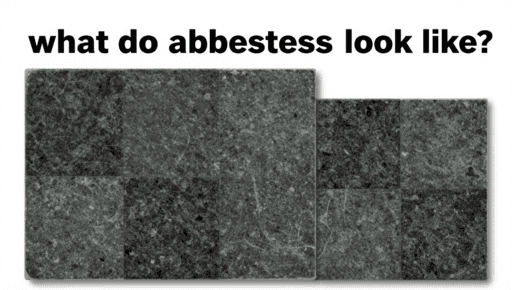
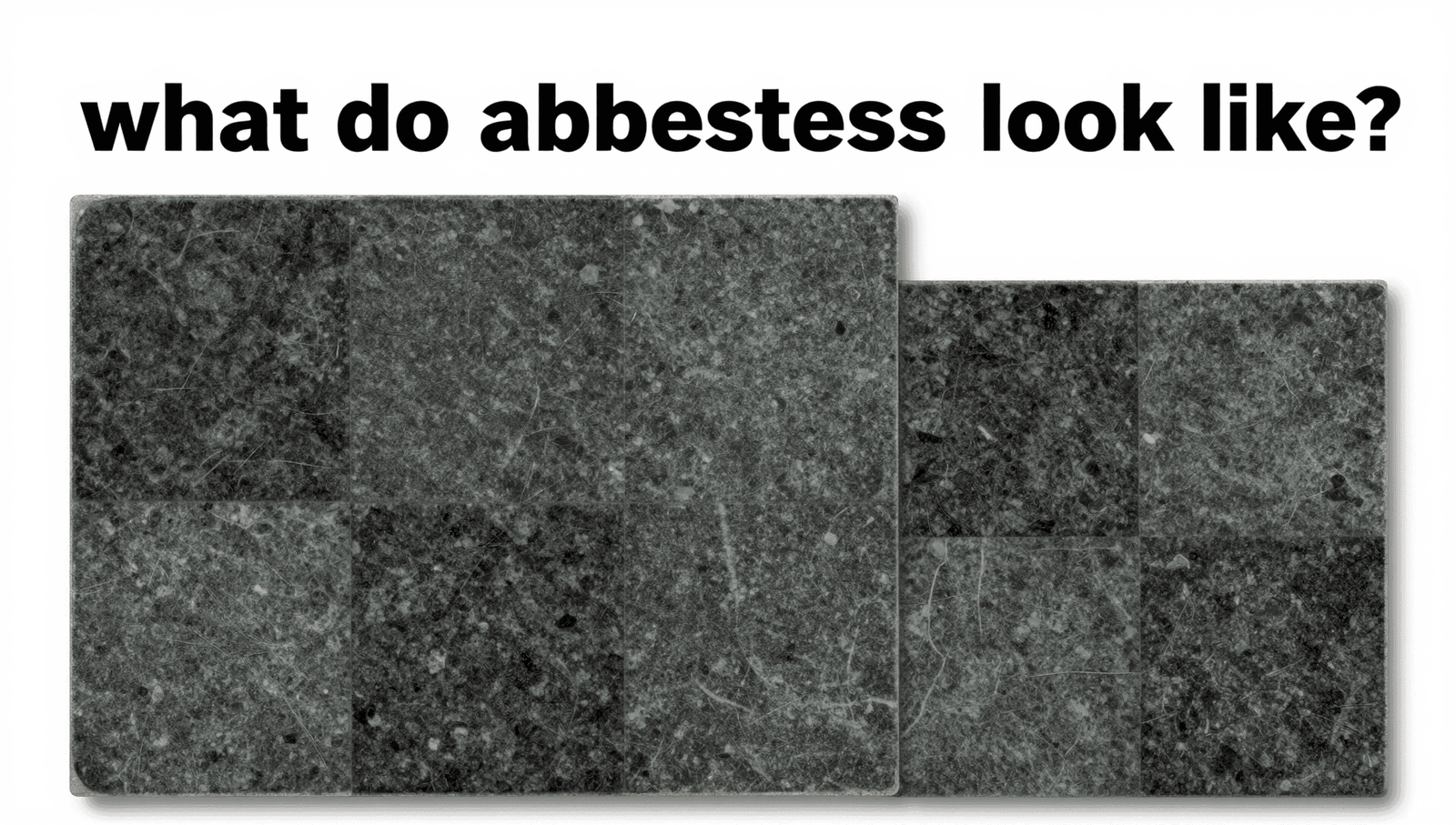
Size and Shape This is one of the biggest giveaways. Asbestos floor tiles were most commonly manufactured in 9-inch by 9-inch squares (about 23cm x 23cm). While they also came in 12×12 and 18×18 inch formats, the 9×9 size is the classic indicator. If you see a room full of small, square tiles from a pre-2000 build, you should be immediately cautious.
Colour and Pattern The patterns are often dark, dense, and oily-looking. You’ll frequently see greys, blacks, dark browns, and deep greens. A very common pattern is a “marbleised” or “streaky” effect, as if different colours were swirled together. They can also have a uniform, speckled look. The colours tend to be muted and asphalt-like, not bright or vibrant like modern vinyl.
Texture and Backing Run your hand over the surface (with a glove!). They often have a slightly textured, matte finish that feels like asphalt or vinyl composition. If a tile is loose, look at the back. It’s often a fibrous, woven mat that looks like cardboard or felt, rather than the smooth, plastic backing of modern tiles. This backing was also a key component containing asbestos.
Condition and Adhesive The black, tar-like adhesive (called “cutback adhesive”) used to stick these tiles down is also a major asbestos suspect. If you see sticky black residue on the subfloor after tiles have come loose, treat it with extreme caution. The tiles themselves can become brittle with age, cracking or breaking into sharp pieces rather than bending.
| Feature | Likely Asbestos Tile (Pre-1990) | Modern Vinyl Tile (Post-2000) |
|---|---|---|
| Common Size | 9×9 inches | 12×12 inches, 18×18 inches, planks |
| Colour Palette | Dark greys, blacks, dark greens, browns | Wide range, including bright colours |
| Pattern | Dense, marbleised, streaky, oily | Clear prints, wood grain, stone look |
| Texture | Matte, asphalt-like, slightly gritty | Often glossy or smooth matte finish |
| Backing | Fibrous, woven, cardboard-like felt | Smooth, plastic, foam, or fleece |
| Typical Age | Installed before 1990 | Installed after 2000 |
Beyond the Tiles: Other Common Asbestos-Containing Materials
Your investigation shouldn’t stop at the floor. Asbestos was used in a huge variety of products. If you’re in an older property, other materials could also be suspect:
- Insulation: Loose-fill insulation in lofts, lagging around pipes and boilers, and sprayed-on insulation on ceilings and walls.
- Roofing and Siding: Roof tiles, sheets, and soffits often contained asbestos.
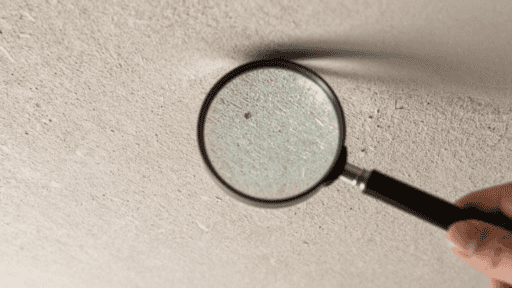
- Textured Coatings: Artex and similar textured ceiling and wall coatings were very common.
- Gaskets and Seals: Found in older boilers, pipework, and flues.
- Flooring Backing: As mentioned, not just the tile itself but the felt backing underneath.
The principle is the same: any building material installed before the year 2000 should be considered suspect until tested. This is the official guidance from the Health and Safety Executive (HSE) in the UK.
What to Do If You Suspect You Have Asbestos Tiles
So you’ve done your visual inspection and you’ve ticked several boxes. Do not panic, and do not disturb them. Here is your immediate action plan:
- Leave Them Alone: If the tiles are in good condition and not being disturbed, the safest action is often to leave them in place. Encapsulation or covering them over is a common and safe solution.
- Do Not Drill, Sand, Scrape, or Break: This is when fibres are released. Avoid any DIY work that could damage the material.
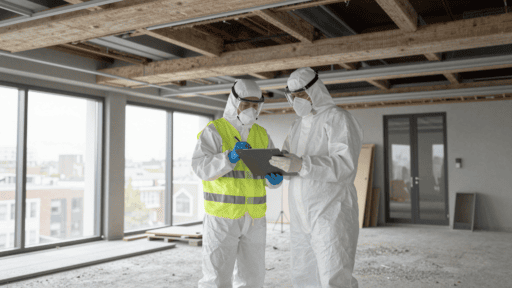
- Seek Professional Confirmation: Contact a UKAS-accredited laboratory or a licensed asbestos removal contractor to have a sample safely taken and analysed. This is the only way to be certain.
- Consult a Professional: If the tiles are damaged, crumbling, or you need to remove them for renovation, you must hire a licensed asbestos removal contractor. In the UK, it is a legal requirement for work on certain asbestos materials to be done by licensed professionals.
Trying to remove them yourself is not only incredibly dangerous but could also be illegal and will certainly create a contamination issue in your home that is far more expensive to remediate than hiring a professional in the first place.
The Health Risks: Why This Matters So Much
This isn’t just about property value or renovation headaches. The health implications are severe and lifelong. When asbestos fibres are inhaled, they become lodged in the lung tissue. The body cannot break them down or expel them. Over time, this can lead to:
- Asbestosis: Scarring of the lung tissue, leading to severe breathing difficulties.
- Mesothelioma: An aggressive and almost always fatal cancer of the lining of the lungs or abdomen.
- Lung Cancer: The risk is significantly increased, especially for smokers.
The latency period—the time between exposure and the onset of disease—can be 20 to 50 years. This is why the asbestos legacy is still claiming thousands of lives in the UK each year. Understanding what asbestos tiles look like is fundamentally about preventing exposure to these deadly fibres.
Frequently Asked Questions
Can I paint over asbestos floor tiles? Yes, painting over intact asbestos floor tiles is a recognised method of encapsulation. However, you must use the correct type of paint (often a specialist encapsulant) and ensure the surface is not sanded during preparation. The goal is to seal the fibres in. If the tiles are damaged, this is not a solution.
How much does it cost to test for asbestos in the UK? A single sample analysis from a UKAS-accredited lab typically costs between £20 and £50. Many companies offer a service where they come to your property to safely take the sample, which may cost a bit more. It’s a small price for certainty.
Are all 9×9 inch tiles made of asbestos? No, not all 9×9 tiles contain asbestos, but a very high percentage of those installed before 1990 do. The size is a major red flag, not a definitive diagnosis. This is precisely why testing is so critical.
What if the tiles are already removed and gone? If you suspect tiles were previously removed, check the subfloor for black, tar-like adhesive residue. This “cutback adhesive” is also highly likely to contain asbestos. Do not sand or scrape it. Treat it as a suspect material and get it tested.
Is it safe to live in a house with asbestos tiles? Yes, it can be perfectly safe if the tiles are in good condition and are left undisturbed. The danger comes from releasing fibres. Intact tiles that are simply in place do not pose a significant risk. The risk arises during renovation, damage, or deterioration.
Where can I get more information on asbestos in the UK? The Health and Safety Executive (HSE) website is the definitive UK resource. They have extensive guidance for homeowners and duty-holders on managing asbestos in domestic and commercial properties.
Conclusion
Asking what do asbestos tiles look like is the first step of a responsible homeowner’s journey. While you can’t get a definitive answer from a glance, the visual clues of size, colour, pattern, and texture are powerful tools for risk assessment. The classic 9×9 inch tile with a dark, marbleised pattern is a strong indicator that you should proceed with extreme caution.
Your takeaway should be this: suspicion leads to testing, and testing leads to certainty. Never rely on guesswork, and never, under any circumstances, disturb a suspect material yourself. By combining your newfound visual awareness with a commitment to professional testing, you can navigate the challenges of an older property safely and protect your health for decades to come.